What Bookkeeping Does a Limited Company Actually Need?
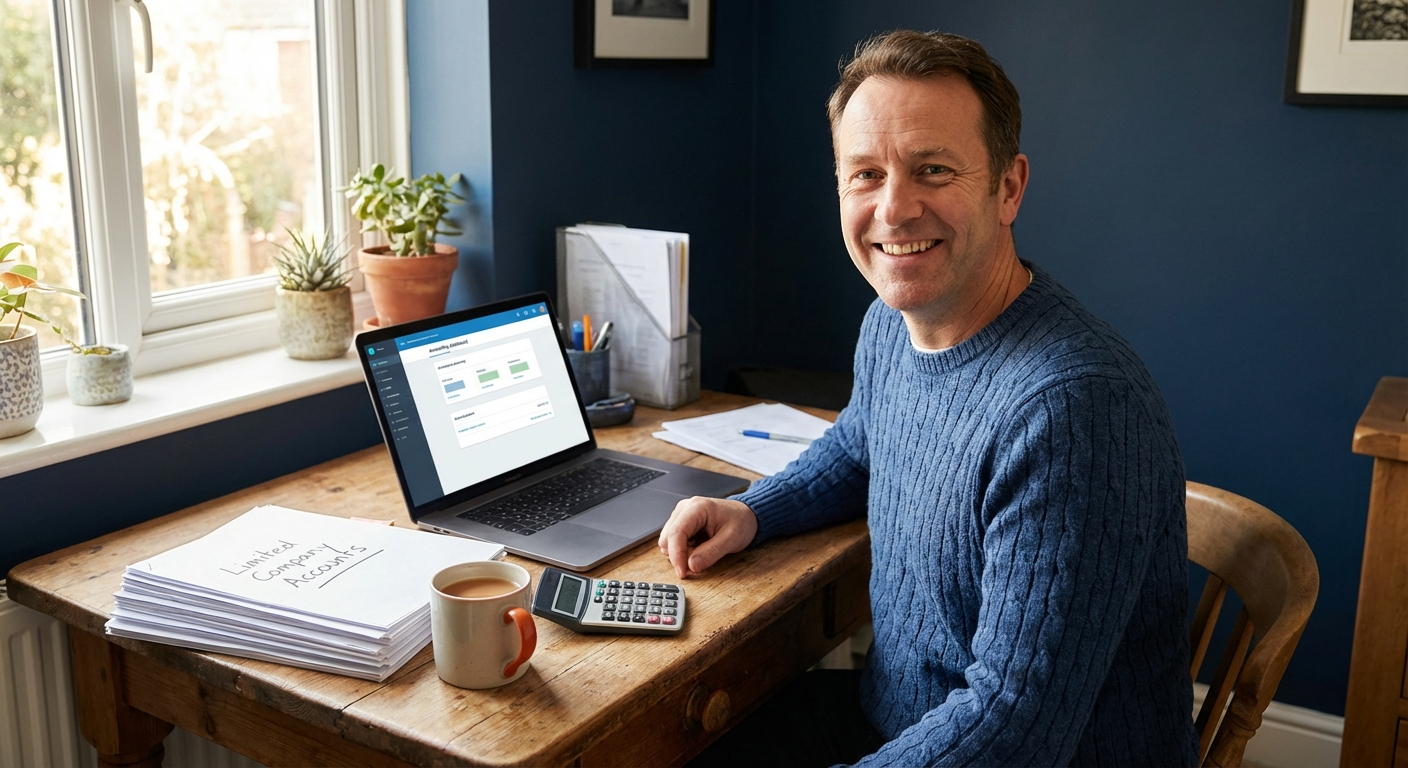
What bookkeeping does a limited company actually need? It’s one of those questions that sounds simple but quietly keeps a lot of directors up at night, especially in those first couple of years when you’re still figuring out what running a company actually involves.
What Bookkeeping Actually Covers for a Limited Company
Bookkeeping is the ongoing process of recording every financial transaction your business makes. That means every invoice you raise, every bill you pay, every bank transfer, every expense. If money moved in or out of your company, it needs to be recorded.
You also need to reconcile your bank account regularly, which just means checking that your records match your actual bank statements. It sounds tedious, and honestly it is, but it’s the thing that stops small errors turning into big problems. Think of it as a health check your finances do every month.
The HMRC and Companies House joint filing service closed in April 2026. You now need to file your company tax return and annual accounts separately with each organisation. If you’re unsure whether your setup handles this, it’s worth getting it checked sooner rather than later.
Your Legal Obligations as a Limited Company Director
As a limited company director, you have legal duties that don’t apply to sole traders. You must file annual accounts with Companies House every year, and you have nine months from the end of your accounting period to do it. You also need to file a Corporation Tax return with HMRC and pay any tax owed within nine months and one day of your year end.
There’s something important to flag here if your company was incorporated before April 2026. The joint filing service that allowed you to submit accounts to both HMRC and Companies House in one go has now closed permanently. From April 2026, those two submissions must be made separately, through each organisation’s own platform. If your software or process hasn’t been updated to reflect that, it’s worth checking now before a deadline arrives.
What If You’re Already Behind on Your Books?
If you’ve been putting the books off and you’re not entirely sure what state your records are in, you’re not alone. A lot of the limited company directors I work with come to me with months of unrecorded transactions, a mix of personal and business spending on the same card, and a vague sense of dread every time an HMRC envelope arrives. It’s fixable. I’ve seen worse.
The first thing to do is get clear on what’s actually missing. Sometimes it’s two months of receipts. Sometimes it’s a year. Either way, a tidy catch-up job is far better than leaving it and hoping no one notices. HMRC fines for late filing are real, but they’re avoidable if you act before the deadline rather than after. If you want to talk through where your books are and what catching up would look like, my limited company bookkeeping page at https://acme-accounting.co.uk/services/limited-company-bookkeeping/ gives you the full picture on how I work.
Can You Do This Yourself, or Should You Get Help?
Yes, you can do your own bookkeeping. Xero makes it genuinely manageable for people who aren’t accountants, and if your business is straightforward with a small number of transactions each month, some directors do keep on top of it themselves. The question isn’t whether you’re capable. It’s whether it’s the best use of your time.
Most of the small business owners I work with in Suffolk didn’t hire me because they couldn’t figure bookkeeping out. They hired me because they were spending three or four hours a month on it and getting anxious about whether they were doing it right. For a fixed monthly fee starting from £25, I handle everything directly, no handoffs, no call centres, just you and me. And 5% of every invoice I raise goes to St. Elizabeth’s Hospice in Ipswich, which matters to me personally.
If you’ve read this and you’re still not sure where you stand, that’s exactly what the free call is for. Book a slot at acme-accounting.co.uk/book-a-call and we’ll talk through your situation with no pressure and no jargon. Sometimes just knowing what you’re dealing with is enough to make the whole thing feel a lot less heavy.
Want to go further?
Here are two good next steps depending on where you are right now. One goes into more detail on managing your books, the other is a direct line to me if you’d rather just talk it through.
Reliable, accurate, and local. Acme Accounting Services provides a full suite of accounting services to small businesses in Ipswich, Suffolk and beyond.
💛 5% of revenue donated to St. Elizabeth’s Hospice, Ipswich.