The Practical Bookkeeping Guide for Home Improvement Businesses
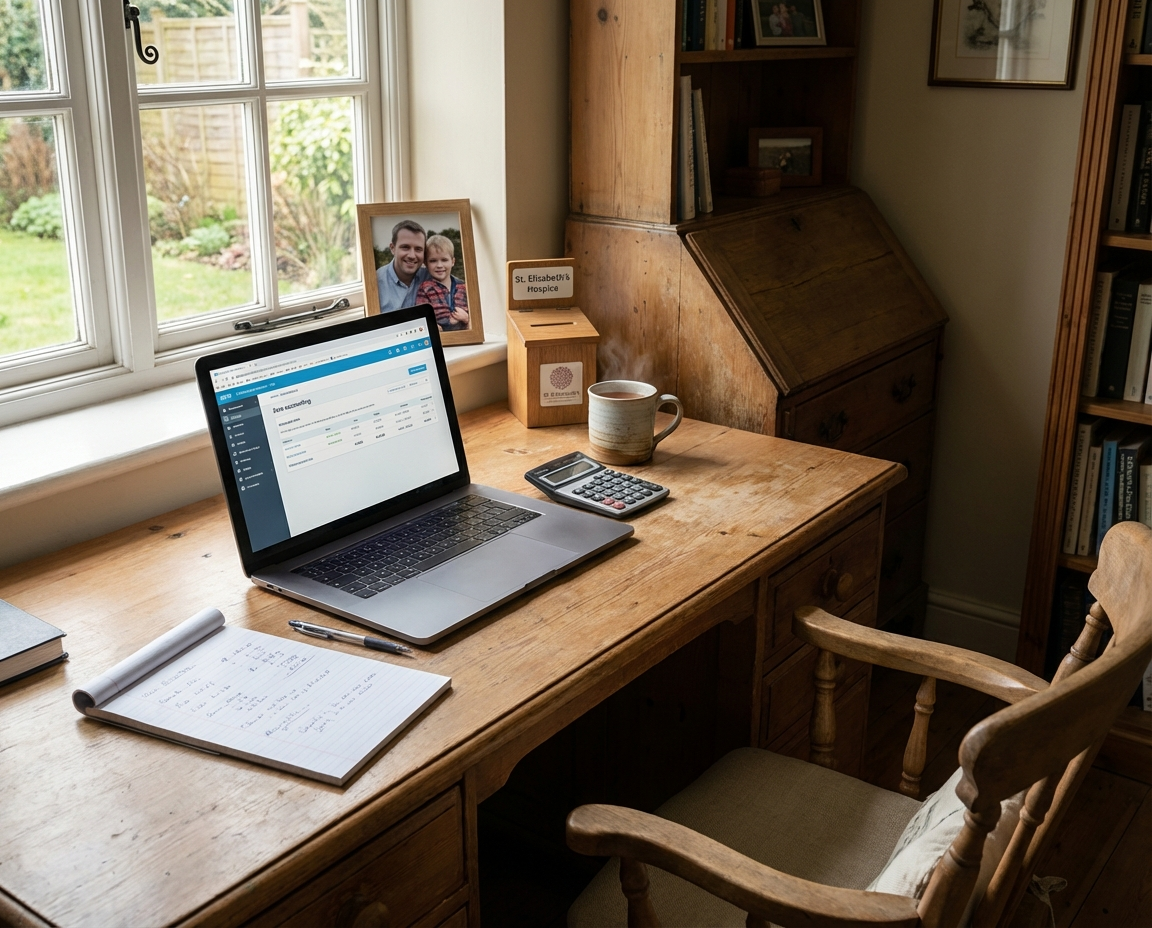
If you run a home improvement business in Suffolk, whether as a sole trader, limited company or subcontractor, the financial admin can pile up fast and the penalties for getting it wrong are real. This guide covers what you actually need to track, where most home improvement traders get caught out, and how to keep your books accurate without it eating your evenings.
Why the finances behind home improvement are harder than they look
The home improvement sector in Suffolk is active. House prices are forecast to rise 2-4% in 2026, and household spending grew by 0.8% annually in 2025 according to the ONS. That means more homeowners commissioning work, which is good for your order book but adds pressure on your financial admin.
Most home improvement traders I speak to are juggling CIS deductions, VAT quarters and payroll at the same time as running jobs and quoting new ones. When the books fall behind, it is rarely from laziness. It is because the financial side of a trade business has a lot of moving parts that all have their own HMRC deadlines.
From 1 October 2026, building control approval for certain residential projects may be subject to the new Building Safety Levy. According to GOV.UK, building regulations approval is already required for a range of home improvement works including window replacements, heating system installations and bathroom additions. If your clients are commissioning this type of work, it is worth factoring the levy timeline into your project planning and invoicing.
Where home improvement businesses most often get it wrong
The financial mistakes I see most often from home improvement traders are not complicated. They tend to come down to three things: missing CIS obligations, mishandling VAT on materials versus labour, and falling behind on self-assessment because the year-end feels far away until it suddenly is not.
Getting CIS wrong
If you work as a subcontractor in construction or home improvement, the contractor you work for is likely deducting CIS tax at source before they pay you. If you are the contractor paying subbies, you are responsible for verifying their status with HMRC and making the correct deductions. Trust issues between traders and clients are already common in this sector, and sloppy CIS handling only makes them worse. Getting the scheme wrong can mean penalties from HMRC on top of having to repay deductions you missed.
Separating materials from labour for VAT
VAT on home improvement work depends heavily on whether you are supplying labour, materials or both, and on the VAT status of the end customer. Charging the wrong rate, or failing to register when your turnover crosses the VAT threshold, puts you at risk of a backdated liability you have to cover yourself. I track this for each client on a monthly basis so there are no surprises at the end of a quarter.
“The home improvement traders who come to me after a bad experience somewhere else usually say the same thing: they did not know their books were wrong until HMRC told them. I check your numbers every month, so you are never in that position.”
A straightforward framework for keeping your books in order
You do not need a complicated system. You need a consistent one. The home improvement businesses I work with in Suffolk that stay on top of their finances follow the same basic pattern: they record everything as it happens, they know their VAT position at any given point, and they are never surprised by a tax bill. Here is how that works in practice.
- Record every invoice and receipt as soon as the job is done or the materials are bought. Using Xero, you can photograph receipts on your phone and they go straight into your records. Nothing sits in a pile waiting to be sorted.
- Reconcile your bank account at least monthly. This means matching every transaction in Xero to what actually came in or went out of your business bank account. It catches errors early and keeps your VAT calculation accurate.
- File CIS returns, VAT returns and payroll submissions on time, every time. I handle all of these for my clients directly through Xero and HMRC-compliant software, so the deadlines are covered without you having to track them yourself.
Making Tax Digital for VAT is already a legal requirement for most VAT-registered businesses, and the MTD rules are set to extend further. I am fully MTD-compliant and all submissions go through software that meets HMRC requirements, so you are covered now and as the rules change.
Comparing your options for managing the books
There are three realistic ways to handle the financial admin in your home improvement business: do it yourself, use a general accountant at year-end only, or work with a dedicated bookkeeper throughout the year. Each has a different cost profile and a different level of risk. Here is an honest comparison based on what I see working with sole traders and small businesses across Suffolk.
| Option | What you get | What it costs you |
|---|---|---|
| DIY bookkeeping | No monthly fee. Full control over your own records. | Time taken away from paid work. High risk of errors in CIS, VAT and payroll that result in HMRC penalties. |
| Year-end accountant only | Annual accounts prepared. Tax return filed. | No support during the year. Errors found at year-end cost more to fix. VAT and CIS obligations remain your problem throughout. |
What to do if your books are behind right now
If your records are in a mess or months out of date, that is fixable. I have caught up books for home improvement traders who had not touched their records in over a year. The process is the same whether you are starting fresh or picking up where you left off.
- Gather your bank statements, invoices and receipts for the period you need to catch up. Digital copies are fine.
- Check whether you are above the VAT registration threshold of £90,000 in rolling 12-month turnover. If you are, and you have not registered, this needs addressing immediately.
Ready to get your books sorted for good?
I offer fixed monthly bookkeeping for home improvement businesses in Suffolk from £25 per month, covering VAT returns, CIS, payroll and Xero management with no tie-in contracts and no hidden fees. Book a free call and I will tell you exactly what your business needs before you spend a penny.
Reliable, accurate, and local. Acme Accounting Services provides a full suite of accounting services to small businesses in Ipswich, Suffolk and beyond.
💛 5% of revenue donated to St. Elizabeth’s Hospice, Ipswich.