What Is a Corporation Tax Return and Do You Need to File One?
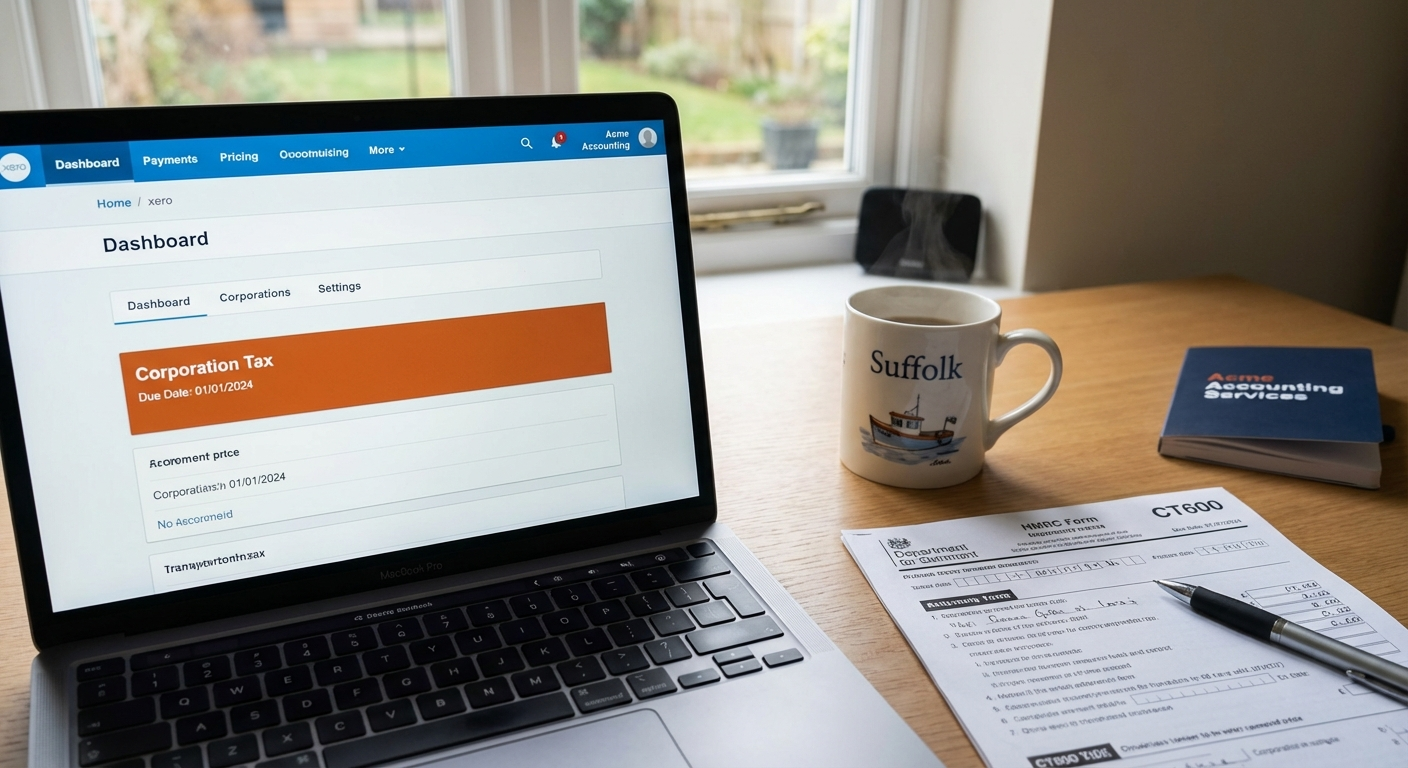
A corporation tax return is something every limited company director has to deal with, but most people only start asking what it actually involves once a deadline is already getting close.
What Is a Corporation Tax Return?
A corporation tax return is the annual report your limited company files with HMRC to declare its profits and work out how much Corporation Tax it owes. It is not the same as the accounts you send to Companies House, though both usually cover the same financial year. The main form involved is called the CT600, which is the official name for the return itself.
The return covers everything from your total income and allowable business expenses through to any reliefs you are claiming, such as capital allowances on equipment. HMRC uses it to calculate your tax bill for the year. If your company made a loss, you still need to file one.
Your accounting period for Corporation Tax cannot be longer than 12 months. If your company accounts cover more than 12 months, you will need to file two separate CT600 returns to cover the full period.
When Does a Corporation Tax Return Need to Be Filed?
The deadline to file your corporation tax return is 12 months after the end of your accounting period. So if your company year-end is 31 March, your CT600 must be with HMRC by 31 March the following year. The Corporation Tax itself is due earlier, usually nine months and one day after your year-end, so the payment deadline and the filing deadline are different dates.
A common mistake I see is directors confusing the nine-month deadline for filing accounts at Companies House with the 12-month deadline for the CT600 at HMRC. They are two separate obligations to two separate organisations. Missing either one can trigger penalties, so it is worth having both dates in your calendar well in advance.
What Information Do You Need to File One?
To complete the CT600, you will need your company name, your Companies House registration number, and your Unique Taxpayer Reference (UTR), which is the 10-digit number HMRC assigned to your company when it was registered. You will also need a set of accounts for the period, showing your income, expenses, and profit. If you have been keeping your books in Xero throughout the year, pulling that together is much more straightforward.
Beyond the basics, the return asks about things like capital allowances (tax relief on equipment and assets you have bought), directors’ loan accounts, and any dividends paid during the year. If you are claiming anything more complex, such as R&D tax credits, the form gets considerably more involved. For most small companies with straightforward trading income and expenses, the core information is manageable once your books are in good shape.
Can You File It Yourself, or Do You Need an Accountant?
You can file your own CT600 directly through HMRC’s online service if your company’s affairs are straightforward. If you have one income stream, clear expenses, and no unusual reliefs to claim, it is not automatically beyond a diligent director. That said, nearly 70,000 penalty appeals were made in 2025 relating to late corporation tax filings, which gives you a sense of how easily this gets missed when you are trying to run a business at the same time.
Where most directors run into trouble is not the filing itself but the preparation. If your bookkeeping is behind, or if you are not confident your profit figure is accurate, the return will reflect that. Accountants typically charge between £60 and £250 or more per month for limited company services, which includes the return. I offer fixed monthly pricing from £25 a month, so you know exactly what you are paying before we start.
If you have read this and still feel a bit unclear about where your company stands, that is completely normal. Corporation tax is one of those things that sounds simpler than it is until you actually sit down to do it. Feel free to book a free call with me at acme-accounting.co.uk/book-a-call and I will give you a straight answer about what you need to do and whether I can help.
Want to go further?
Whether you want a detailed walkthrough of how to file, or you would rather just hand it to someone and get on with running your business, here are two good next steps.
Reliable, accurate, and local. Acme Accounting Services provides a full suite of accounting services to small businesses in Ipswich, Suffolk and beyond.
💛 5% of revenue donated to St. Elizabeth’s Hospice, Ipswich.