A Plain-English Guide to Filing Your Corporation Tax Return
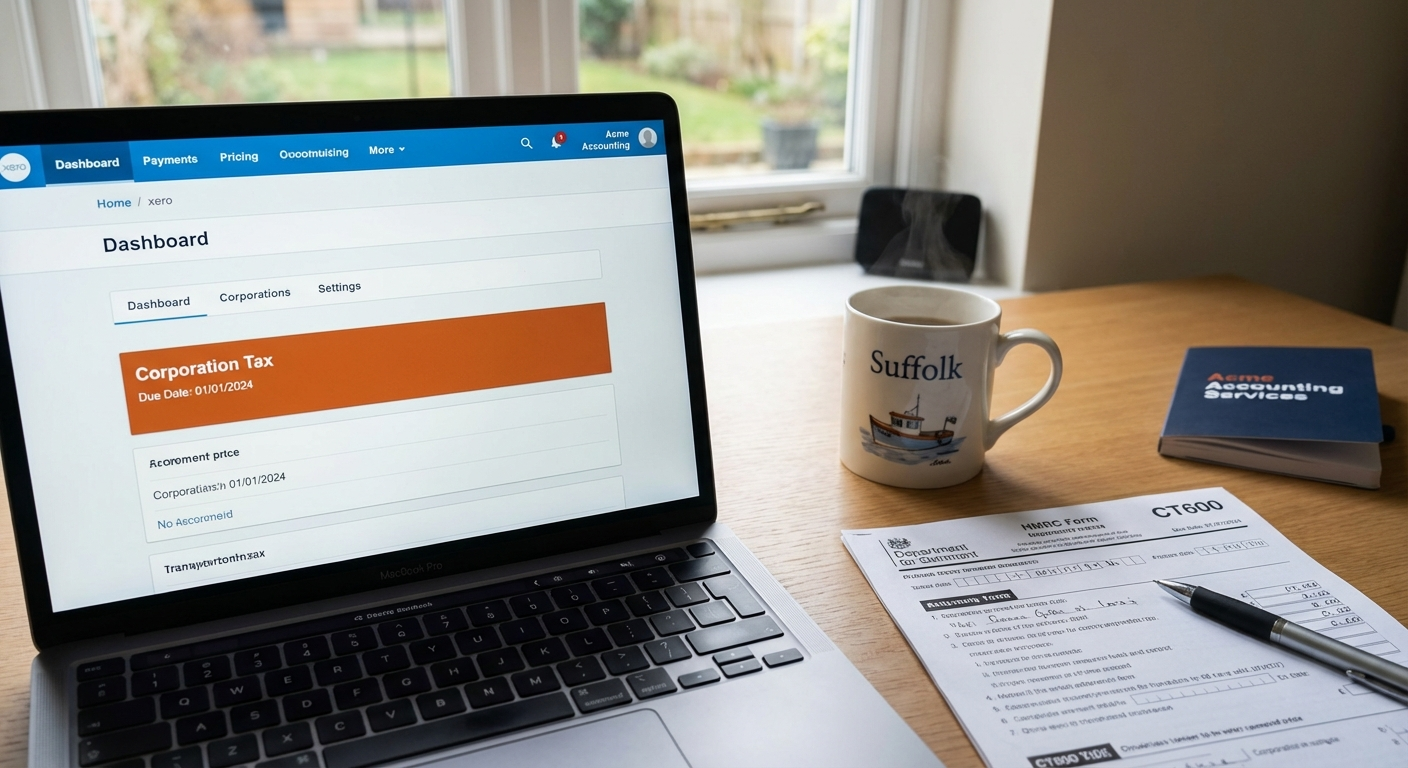
If you run a limited company and you’re not entirely sure what a corporation tax return involves, when it is due, or whether you can file it yourself, this guide gives you a straightforward answer to each of those questions. By the end, you will know exactly what HMRC expects, what the penalties are for getting it wrong, and what your realistic options are.
What HMRC actually expects from your limited company
Every limited company registered in the UK must file a Company Tax Return with HMRC after each accounting period. The return is filed using a form called the CT600, and it must include your company name, registration number, HMRC tax reference, income, chargeable gains, profits before deductions, and any reliefs you are claiming, such as research and development credits. You can read the full HMRC CT600 guide for the complete list of what needs to go in.
Your accounting period for Corporation Tax cannot be longer than 12 months. If your company accounts cover a period of more than 12 months, HMRC requires you to file two separate CT600 returns to cover the full period. This catches a lot of new directors off guard, particularly those who set up mid-year.
According to HMRC, accounting period dates must be updated with HMRC by 31 December 2025, and all Company Tax Returns must be filed by 31 March 2026 to avoid late filing penalties. If your accounting period dates are not updated before your original filing date, late filing penalties apply regardless of when you actually file.
Where limited company directors most often go wrong
Filing a corporation tax return looks straightforward on the surface. In practice, there are two errors that consistently result in penalties, and both are entirely avoidable once you know what to look for.
Confusing the Companies House deadline with the HMRC deadline
Your statutory accounts must reach Companies House within nine months of your accounting period end date. Your CT600, however, must be filed with HMRC within twelve months of your accounting period end date. These are two separate deadlines, two separate organisations, and two separate filing requirements. Forum discussions on UK Business Forums consistently identify this confusion as one of the most common causes of preventable corporation tax penalties.
Missing the penalty appeal window after an automated fine
HMRC issues late filing penalties automatically, and in 2025 nearly 70,000 appeals were made against automated corporation tax penalties. That volume tells you two things: penalties for late filing are common, and many of them are successfully challenged. If you receive a penalty notice and believe you have a reasonable excuse, you have the right to appeal, but only within a set time window after the penalty is issued.
“I have seen directors file their own CT600 and get away with it for two or three years, then face a penalty in year four because one detail changed and they did not catch it. Clean bookkeeping records throughout the year are what make the return straightforward. If your records are in order on Xero, the numbers are already there waiting to be used.”
What filing a corporation tax return actually involves
The process breaks down into a clear sequence. Each step depends on the one before it, which is why clean bookkeeping records throughout the year matter more than most directors realise.
- Confirm your accounting period with HMRC and check that the dates on record match your actual year-end. If they do not match, update them before your original filing deadline to avoid automatic penalties.
- Prepare your statutory accounts, showing your income, expenses, and profit or loss for the period. These accounts feed directly into the CT600 and must be filed with Companies House within nine months of your period end.
- Complete and submit the CT600 to HMRC within twelve months of your accounting period end date. The form requires your company details, a tax calculation based on your profit, and any reliefs being claimed. If your accounts covered more than twelve months, you will need to submit two returns.
Your corporation tax payment deadline is separate again. Tax owed is typically due nine months and one day after your accounting period ends. That means you may owe and need to pay tax before your CT600 filing deadline arrives, so do not wait until the return is filed to calculate what you owe.
DIY versus getting professional help: a realistic comparison
The honest answer to whether you should file your own corporation tax return depends on how straightforward your company’s finances are. Research from More Than Accountants puts the typical monthly cost of professional limited company services, including corporation tax, at between £60 and £250 plus VAT. That range reflects complexity. A single-director consultancy with one income stream sits at the lower end. A company with multiple income types, capital assets, or R&D activity sits much higher.
| Option | Pros | Cons |
|---|---|---|
| DIY via HMRC Online | No professional fee. Full control over the submission. | High risk of errors in tax calculation. No support if HMRC queries the return. Software limitations for complex deductions. |
| Professional bookkeeper and accountant | Accurate filing. Deadlines managed for you. Potential to identify allowable deductions you would otherwise miss. | Monthly fee required. Quality and availability vary significantly between providers. |
What to do before your next filing deadline
Whether you are filing yourself or working with a professional, the actions below will put you in a much stronger position before your deadline arrives. Each one is practical and can be done this week.
- Log in to your HMRC business tax account and check the accounting period dates on record. Confirm they match your actual company year-end. If they do not, request a correction before your original filing deadline to avoid automatic late filing penalties.
- Check that your bookkeeping records are complete and reconciled up to your period end date. If you use Xero, your profit and loss report should match your bank statement balance. Gaps or unexplained differences at this stage will delay your return and could affect the accuracy of your tax calculation.
Want your limited company books ready before the deadline?
I handle bookkeeping, year-end accounts and Xero management for limited companies across Suffolk on fixed monthly pricing from £25/month, with no tie-in contracts and no handoffs to a junior member of staff. Book a free call and I will tell you exactly what needs doing and what it will cost.
Reliable, accurate, and local. Acme Accounting Services provides a full suite of accounting services to small businesses in Ipswich, Suffolk and beyond.
💛 5% of revenue donated to St. Elizabeth’s Hospice, Ipswich.