A Practical Guide to Bookkeeping for Tradespeople
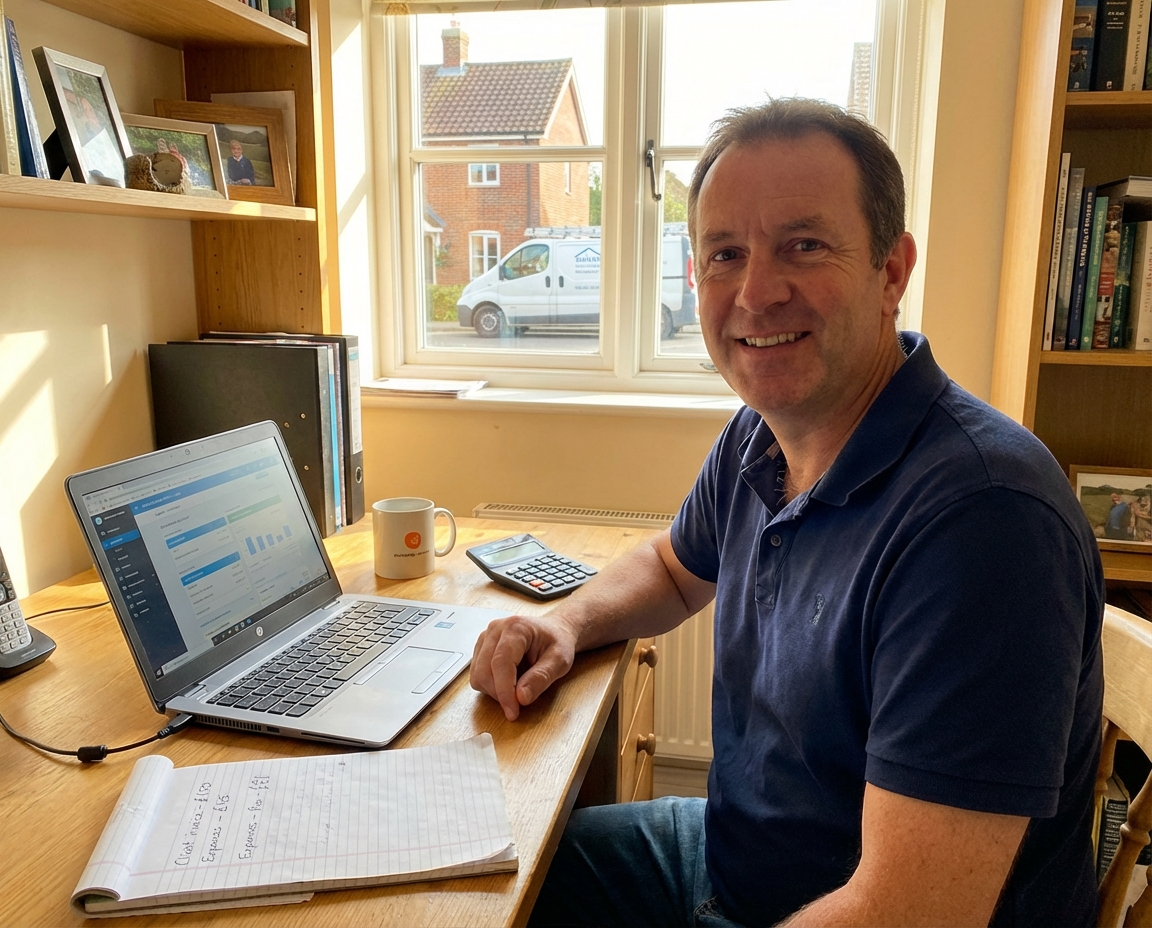
Running a trade business in Suffolk means your time is spent on the tools, on site, or chasing the next job, not sitting at a desk making sense of HMRC paperwork. This guide walks you through what you actually need to have in order financially, from VAT returns and CIS deductions to payroll and self assessment, so you know exactly what is required and what it costs to get it handled properly.
Why the financial side of trades work is harder right now
The UK trades sector is under real pressure in 2026. According to the Office for National Statistics, total construction output fell by 2.0% in the three months to January 2026, marking the fourth consecutive quarterly fall. Private new housing alone dropped by 6.3% over the same period.
At the same time, research from Insight DIY found that rising material and operating costs disrupted 43% of tradespeople in 2025, with price increases of 9.5% forecast for 2026. And 85% of tradespeople were asked by customers to reduce their prices in the past year. That combination of shrinking margins and rising costs makes accurate bookkeeping more important than ever, not less.
If you are working under CIS as a subcontractor, HMRC can now amend CIS deduction amounts claimed on your returns to correct errors or omissions. That means any inaccuracy in how you record or report deductions can be corrected by HMRC directly, with penalties applied where false information has been provided. Getting your CIS records right is not optional.
Where tradespeople typically go wrong with their books
Most tradespeople do not set out to get their finances wrong. The problems usually come from using a system that was never set up properly in the first place, or from trying to manage everything alone while also running a full workload.
Treating CIS deductions as income
If you work as a subcontractor under the Construction Industry Scheme, contractors are required to deduct tax at source before they pay you. Those deductions are not gone, they are credits against your tax bill, but only if they are recorded correctly in your accounts throughout the year. If you do not reconcile CIS deductions properly, you may overpay tax or trigger an HMRC inquiry. HMRC guidance confirms that only the directly incurred costs of materials are excluded from CIS deductions, so getting the categories right matters.
Missing VAT registration thresholds
The VAT registration threshold currently sits at £90,000 in taxable turnover over any rolling 12-month period. If your bookkeeping is not current, you may not spot when you are approaching that figure until it is too late. Late VAT registration carries financial penalties from HMRC, and with material costs rising sharply in 2026, turnover figures can change quickly even when your actual profit margin is not growing.
“The tradespeople I work with in Suffolk did not get into their trade to spend evenings trying to figure out CIS returns. I handle the financial side so they can get back to what they are actually good at, and they know they can pick up the phone to me directly if something changes on a job.”
How to get your financial records in order
There are five areas that every self-employed tradesperson or trade business owner needs to have covered. Missing any one of them creates a gap that costs either time, money, or both when HMRC comes asking.
- Bookkeeping: Every invoice you raise and every cost you incur needs to be recorded accurately and consistently, ideally in real time using cloud software like Xero so nothing gets missed at year-end.
- VAT returns: If you are VAT-registered, your returns must be submitted digitally under Making Tax Digital for VAT. That means your records need to be held in MTD-compatible software from the start, not transferred across at the last minute.
- CIS returns: If you are a contractor paying subcontractors, you are responsible for making monthly CIS returns to HMRC and deducting the correct amount. If you are a subcontractor, your deduction records need to tie up with what contractors have reported on your behalf.
Payroll and self assessment sit alongside these. If you employ anyone, even one person, PAYE payroll must be run and reported to HMRC each pay period in real time. And if you are a sole trader or limited company director, self assessment deadlines apply regardless of whether you have an accountant chasing you.
Comparing your options: DIY versus using a bookkeeper
The honest question is not whether you need your books kept but who does it and at what cost. The table below sets out the practical difference between handling it yourself and working with a dedicated bookkeeper like me.
| Option | What you get | What it costs you |
|---|---|---|
| DIY bookkeeping | No monthly fee. Full control over your own records. | Time spent on admin instead of billable work. Higher risk of VAT or CIS errors. No one to catch problems before they reach HMRC. |
| Dedicated bookkeeper | Accurate monthly records. VAT, CIS, payroll and self assessment handled. Direct access to one person who knows your business. | Fixed monthly fee from £25/month. No tie-in, no hidden charges. |
What to do this week to get your finances under control
You do not need to fix everything at once. Starting with the right steps in the right order makes the process straightforward rather than overwhelming.
- Check whether your turnover in the last 12 months has approached or passed the £90,000 VAT registration threshold. If it has or is close, this needs addressing before your next invoicing cycle.
- If you work under CIS as a subcontractor, pull together your payment statements from contractors for the current tax year and check that deductions recorded match what HMRC holds. Discrepancies are common and fixable early but costly if left.
Ready to get your trade finances in order?
I offer bookkeeping, VAT returns, CIS returns, payroll and Xero setup for trade businesses across Suffolk, with fixed monthly pricing from £25 per month and no tie-in contracts. Book a free call and I will tell you exactly what your business needs and what it will cost.
Reliable, accurate, and local. Acme Accounting Services provides a full suite of accounting services to small businesses in Ipswich, Suffolk and beyond.
💛 5% of revenue donated to St. Elizabeth’s Hospice, Ipswich.