What Is Cloud Accounting and Do You Actually Need It?
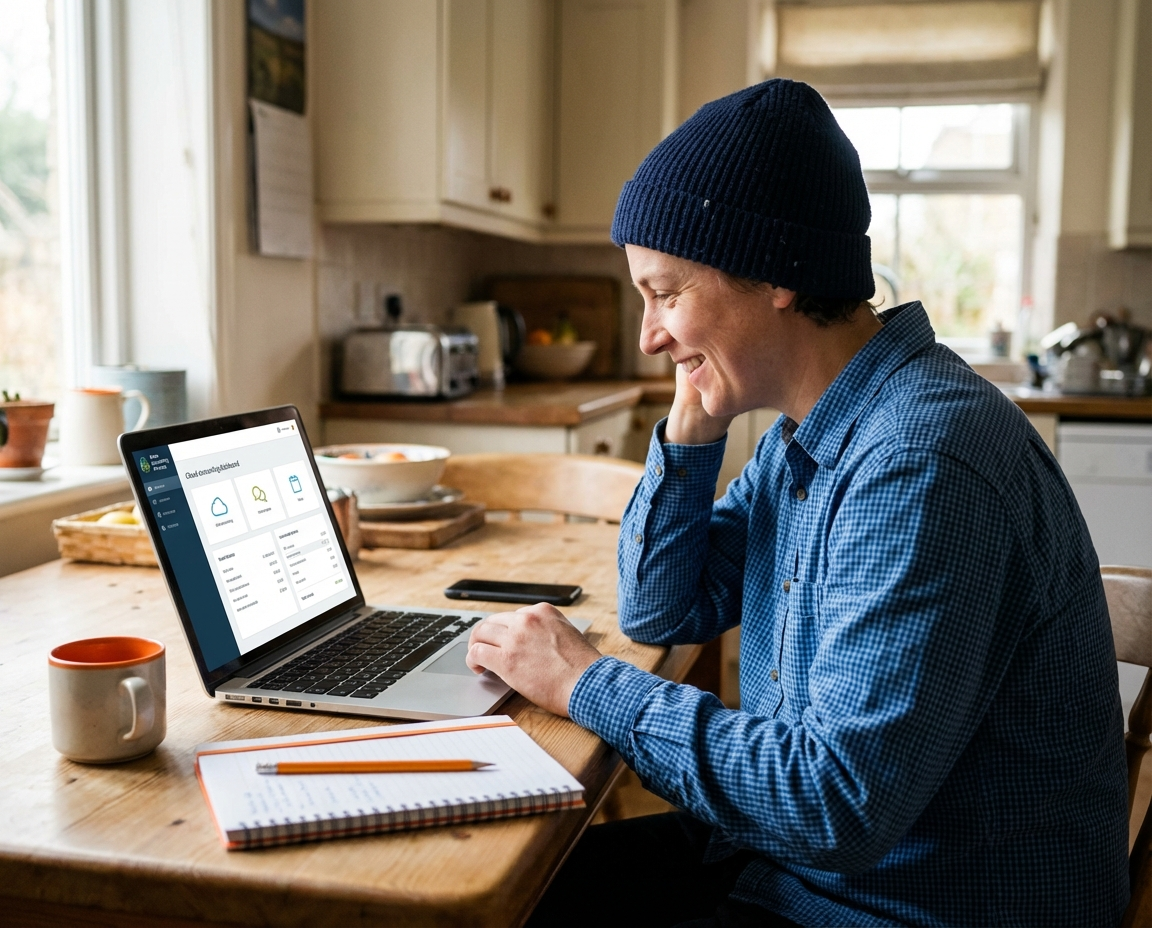
What is cloud accounting? It’s a question I get asked a lot, usually by someone who’s been told they need to ‘move to the cloud’ and isn’t quite sure what that actually means for their business.
What Cloud Accounting Actually Means
Cloud accounting is just bookkeeping software that runs on the internet rather than on your computer. Your financial records are stored on secure remote servers, which means you can log in from your laptop, phone, or tablet and see everything in real time. There’s nothing to install and nothing to back up manually.
The most common platforms in the UK are Xero, QuickBooks, Sage and FreeAgent. I use Xero with all my clients because it’s solid, well-supported, and works cleanly with HMRC’s Making Tax Digital requirements. The days of emailing spreadsheets back and forth are genuinely over.
Cloud accounting platforms like Xero use AES-256 encryption and two-factor authentication as standard. Your data is typically stored on infrastructure like Amazon Web Services or Microsoft Azure. The biggest security risk is usually human error, like falling for a phishing email, not the software itself.
Why It Actually Matters for Your Business
The practical difference is visibility. With cloud accounting, you can see where your money is sitting right now, not just at year-end when your accountant finally gets the spreadsheet. That kind of real-time picture is genuinely useful when you’re deciding whether to take on a new contract or buy a piece of equipment.
It also makes working with a bookkeeper much easier. When I’m set up on Xero with a client, I can see their transactions as they come in, spot anything odd, and get their VAT return filed without a single email attaching files. You don’t have to do anything differently on your end except carry on running your business.
Cloud Accounting and Making Tax Digital
Making Tax Digital, or MTD, is HMRC’s plan to bring tax record-keeping online for everyone. From 6 April 2026, some sole traders and landlords must use compatible software to keep digital records, send quarterly updates to HMRC, and submit their tax returns. Cloud accounting software like Xero is built to handle exactly this.
If you’re a sole trader and your income is above the threshold, you’ll need software that can create and store your records digitally and send the right submissions to HMRC. You can use different tools for different tasks, but only one piece of software per submission. I handle all of this for my clients so they don’t have to think about it.
Is Cloud Accounting Right for You?
If you’re still keeping records in a spreadsheet, or using desktop software that only works on one computer, moving to cloud accounting is worth thinking about seriously. It’s not complicated, and the switch is far less painful than most people expect. Most small businesses can be set up and running in a couple of hours.
The honest answer is that cloud accounting won’t manage itself. The software is a tool, and it still needs someone to keep the records accurate and the submissions on time. That’s where having a bookkeeper in your corner makes the real difference, especially as MTD rolls out further over the next couple of years.
If you’re sitting on the fence about cloud accounting and just want a straight answer about whether it’s right for your setup, give me a ring. There’s no pitch involved, just an honest conversation about where you are and what would actually help.
Want to go further with this?
Here are two useful next steps depending on where you’re at. One gives you the full practical picture, the other gets you talking to me directly.
Reliable, accurate, and local. Acme Accounting Services provides a full suite of accounting services to small businesses in Ipswich, Suffolk and beyond.
💛 5% of revenue donated to St. Elizabeth’s Hospice, Ipswich.