The Plain-English Guide to Small Business Bookkeeping
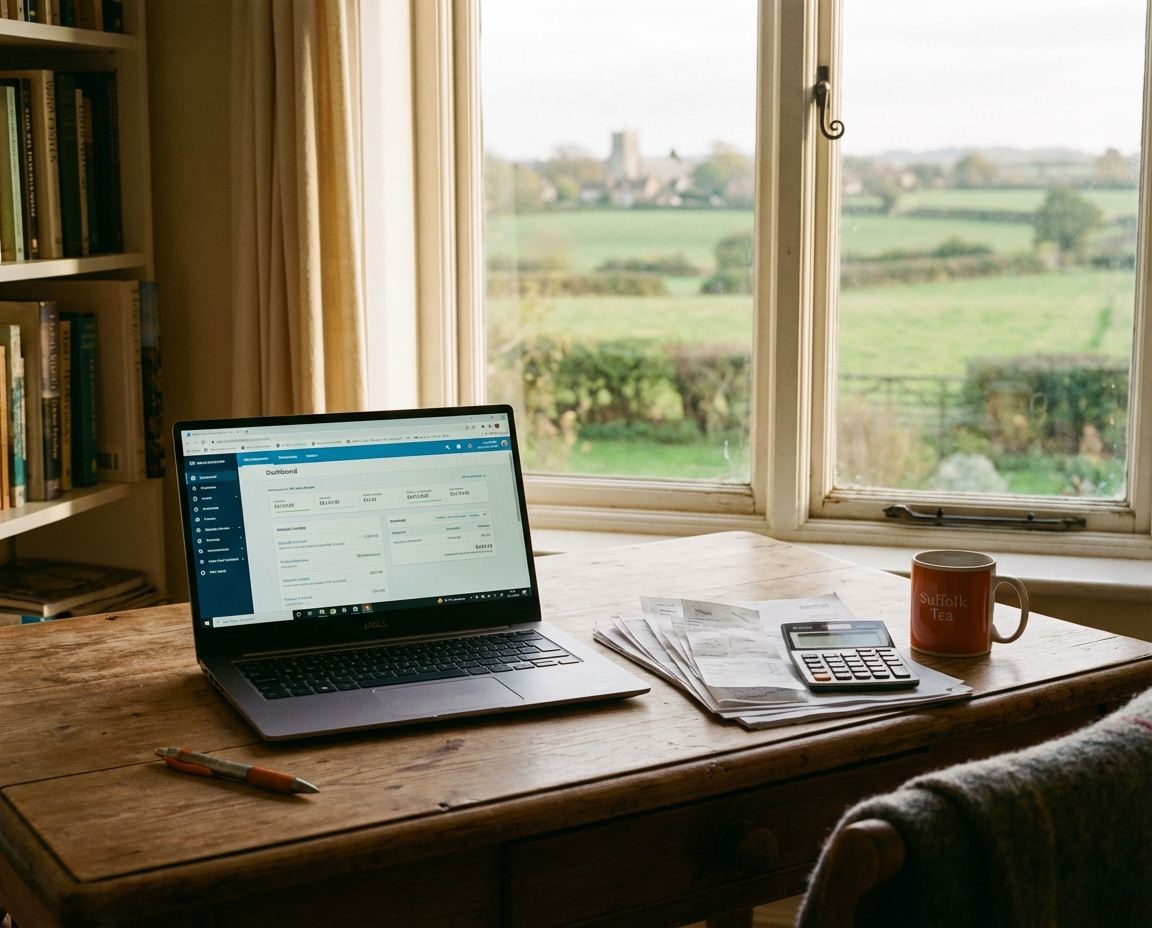
If your records live in a spreadsheet, a shoebox, or nowhere at all, you are not alone and you are not beyond fixing. This guide explains exactly what small business bookkeeping involves, what HMRC requires you to keep, and what your options actually cost.
Why keeping on top of your books is harder right now
HMRC is changing the rules for how small businesses record and report their finances. From 6 April 2026, Making Tax Digital for Income Tax requires sole traders and landlords with qualifying income over £50,000 to keep digital records and submit quarterly updates through compatible software. If your income sits above that threshold and you are still working from a spreadsheet or paper receipts, you will need to act before the deadline.
The practical effect is that annual bookkeeping is no longer sufficient for a growing number of businesses. Quarterly submissions mean your records need to be accurate and up to date throughout the year, not just at the point you sit down to file your self assessment. Getting behind now creates a harder catch-up problem later.
Making Tax Digital for Income Tax applies from 6 April 2026 to sole traders and landlords with qualifying income over £50,000. Qualifying income includes self-employment and property income. You must use compatible software to create, store and submit your records. Source: GOV.UK.
Where most small business owners go wrong
The most common bookkeeping problems I see are not complicated. They come from the same small set of habits that feel manageable in month one and become a real problem by month ten. Understanding where things typically break down is the first step to stopping it from happening in your business.
Mixing personal and business finances
Running personal and business transactions through the same bank account makes every reconciliation harder and longer. It introduces errors in expense claims, blurs your actual profit picture, and creates exactly the kind of messy records that cause problems if HMRC ever asks questions. A separate business account costs very little and removes a significant source of confusion immediately.
Leaving records until year-end
Batch-processing twelve months of receipts and invoices in one go is stressful, inaccurate and increasingly non-compliant for businesses within scope of Making Tax Digital. HMRC guidance requires self-employed individuals to keep records of all sales, income, business expenses, and VAT records if registered. Letting those pile up means you are relying on memory to fill in gaps, and memory is not a reliable audit trail.
“My fixed monthly pricing starts at £25 per month. For most of my clients, that is less than one hour of their own time spent trying to do this themselves, and it covers everything so they never have to think about it again.”
What a working bookkeeping system actually covers
Good bookkeeping is not one single task. It is a set of recurring processes that run in parallel throughout the year. When each one is done on time, your financial picture stays accurate and your obligations stay met. Here is what a complete system needs to cover for a typical small business in the UK.
- Recording all income and expenses as they happen, categorised correctly in your accounting software, so your reports reflect reality rather than guesswork.
- Reconciling your bank account regularly, meaning every transaction in your software is matched to your actual bank statement, and any gaps or errors are caught early.
- Preparing and submitting VAT returns on time if you are VAT registered, including maintaining the digital records required under Making Tax Digital for VAT.
For businesses with employees or subcontractors, payroll and CIS returns sit on top of this. Each adds its own submission deadlines and record-keeping requirements. Getting one wrong does not cancel the others out, which is why the whole system needs to run together rather than in separate bursts of effort.
What your options cost and what they are worth
There are three realistic options for small business bookkeeping: do it yourself, use software alone, or work with a bookkeeper. Each has a real cost, and the cost of doing it badly is often higher than the cost of doing it properly. The table below sets out the main trade-offs in plain terms.
| Option | What you get | What it costs you |
|---|---|---|
| DIY on spreadsheets | No monthly fee. Full control over your own data. | Your time, every month. High error risk. Not MTD-compatible. Penalties if submissions are late or incorrect. |
| Software only (e.g. Xero unmanaged) | Digital records. Bank feeds. MTD-compatible if set up correctly. | Monthly software subscription. Learning curve. No one catches your errors or handles submissions for you. |
What to do right now if your books are behind
Being behind on your bookkeeping is not unusual, and it is fixable. The priority is to stop the backlog from growing while you work out how to clear it. These steps apply whether you are a few weeks behind or a couple of years behind.
- Open a dedicated business bank account if you do not already have one. This is the single most effective way to make future bookkeeping faster and more accurate, because every business transaction runs through one place.
- Gather your bank statements, invoices and receipts for the period you are behind on. You do not need them perfectly organised. A bookkeeper can work from raw statements. What matters is that nothing is missing.
Ready to get your books sorted properly?
I offer fixed monthly bookkeeping from £25 per month, covering everything from bank reconciliation and VAT returns through to Xero management and MTD compliance, with no lock-in contracts and direct access to me throughout. Book a free call and I will tell you exactly what your business needs and what it will cost before you commit to anything.
Reliable, accurate, and local. Acme Accounting Services provides a full suite of accounting services to small businesses in Ipswich, Suffolk and beyond.
💛 5% of revenue donated to St. Elizabeth’s Hospice, Ipswich.