What Every Self-Employed Tradesperson Should Know About Their Books
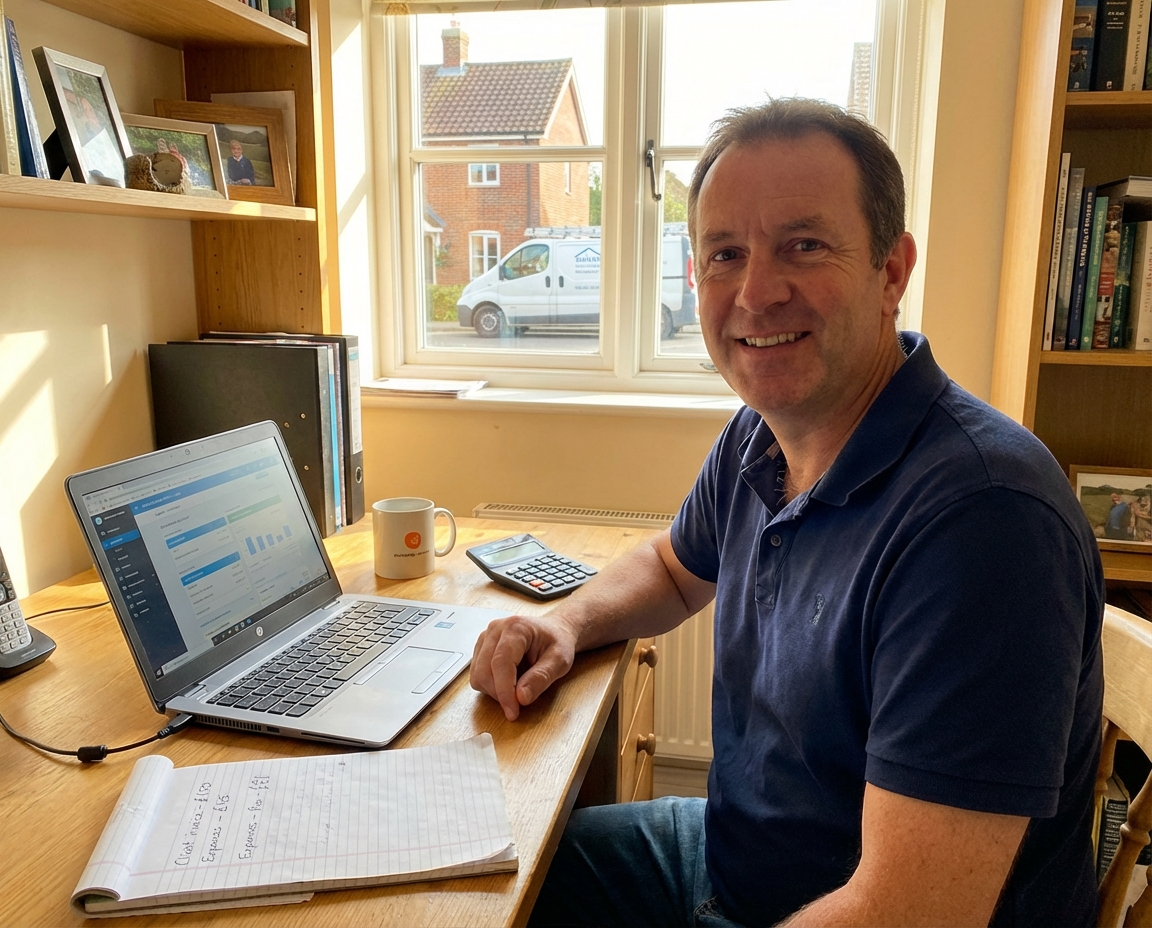
Do tradespeople need a bookkeeper? If you’re running your own business on the tools, it’s a completely reasonable question to ask — and the honest answer is that it depends on what’s on your plate financially, and how much of your evenings you’re happy to spend on paperwork.
What records do self-employed tradespeople actually need to keep?
HMRC requires every self-employed person to keep records of their income and expenses. That means invoices you’ve raised, receipts for materials and tools, mileage if you use your own vehicle for work, and any subcontractor payments you’ve made. You don’t need a fancy system, but you do need something that works and that you can actually find when January comes around.
The records need to go back at least five years from the 31 January self assessment filing deadline for the relevant tax year. If HMRC investigates and you can’t produce them, you could face penalties even if you paid the right tax. Keeping things tidy as you go is far less painful than trying to reconstruct six months of invoices from memory.
Making Tax Digital (MTD) is already in force for VAT-registered businesses, and HMRC is extending it to income tax for sole traders with income over £50,000 from April 2026, dropping to £30,000 the following year. That means digital record-keeping will soon be a legal requirement for many tradespeople, not just a good habit.
How does CIS affect your bookkeeping as a tradesperson?
The Construction Industry Scheme (CIS) applies to most people working in construction, whether you’re a subcontractor getting paid or a contractor paying others. If you’re a subcontractor, your contractor is required to deduct either 20% or 30% from your payments and pass it to HMRC — unless you have gross payment status, which lets you receive your full payment and sort the tax yourself. Getting that deduction rate wrong, or not tracking what’s been withheld, can create a real headache when it comes to your self assessment return.
If you pay subbies yourself, you’re responsible for verifying them with HMRC, applying the right deduction rate and submitting monthly CIS returns. Miss a return and HMRC can charge a £100 penalty straight away, with more to follow the longer it goes unfiled. It’s one of those areas where the admin load catches people off guard, especially when you’re busy on site.
VAT, payroll and self assessment — what’s actually involved?
If your taxable turnover goes above £90,000 in a rolling 12-month period, you must register for VAT. That means charging VAT on your invoices, filing quarterly VAT returns and paying any VAT you owe to HMRC on time. The quarterly deadlines come around faster than most people expect, and late submissions can trigger surcharges.
If you employ anyone — even part-time — you need to run payroll, report to HMRC in real time through something called RTI (Real Time Information), and handle the payment of PAYE and National Insurance. Self assessment is then the annual return where you declare your total income, claim your allowable expenses, and pay whatever income tax and Class 4 National Insurance is due. Most tradespeople dread it, but it’s straightforward when your records are in order throughout the year.
When does getting a bookkeeper actually make sense?
If your work is simple and low-volume, you might manage fine with a spreadsheet and a bit of discipline. But once CIS is involved, or you’re VAT-registered, or you’re paying staff, the admin starts to stack up quickly. According to research from Insight DIY, 90% of tradespeople felt stressed in 2025 and 82% experienced burnout — and chasing paperwork in the evenings doesn’t help with either of those things.
A bookkeeper takes the ongoing admin off your hands so you’re not thinking about VAT deadlines while you’re trying to price a job. I work with tradespeople across Suffolk on a fixed monthly basis from £25 a month, handling bookkeeping, CIS returns, VAT, payroll and self assessment. Everything runs through Xero, which keeps your records digital and MTD-compliant, and you always deal directly with me — no handoffs, no call centres.
If you’re a tradesperson and you’re not completely sure whether your books are in good shape, just book a free call and we can talk it through. No pressure, no jargon — just a straight conversation about what you actually need. I’m always happy to help you figure out where you stand before you commit to anything.
Want to go further?
Whether you want to read more about how bookkeeping works for tradespeople or you’d like to talk through your own situation, here are two good next steps.
Reliable, accurate, and local. Acme Accounting Services provides a full suite of accounting services to small businesses in Ipswich, Suffolk and beyond.
💛 5% of revenue donated to St. Elizabeth’s Hospice, Ipswich.